Sculpture in Public Spaces

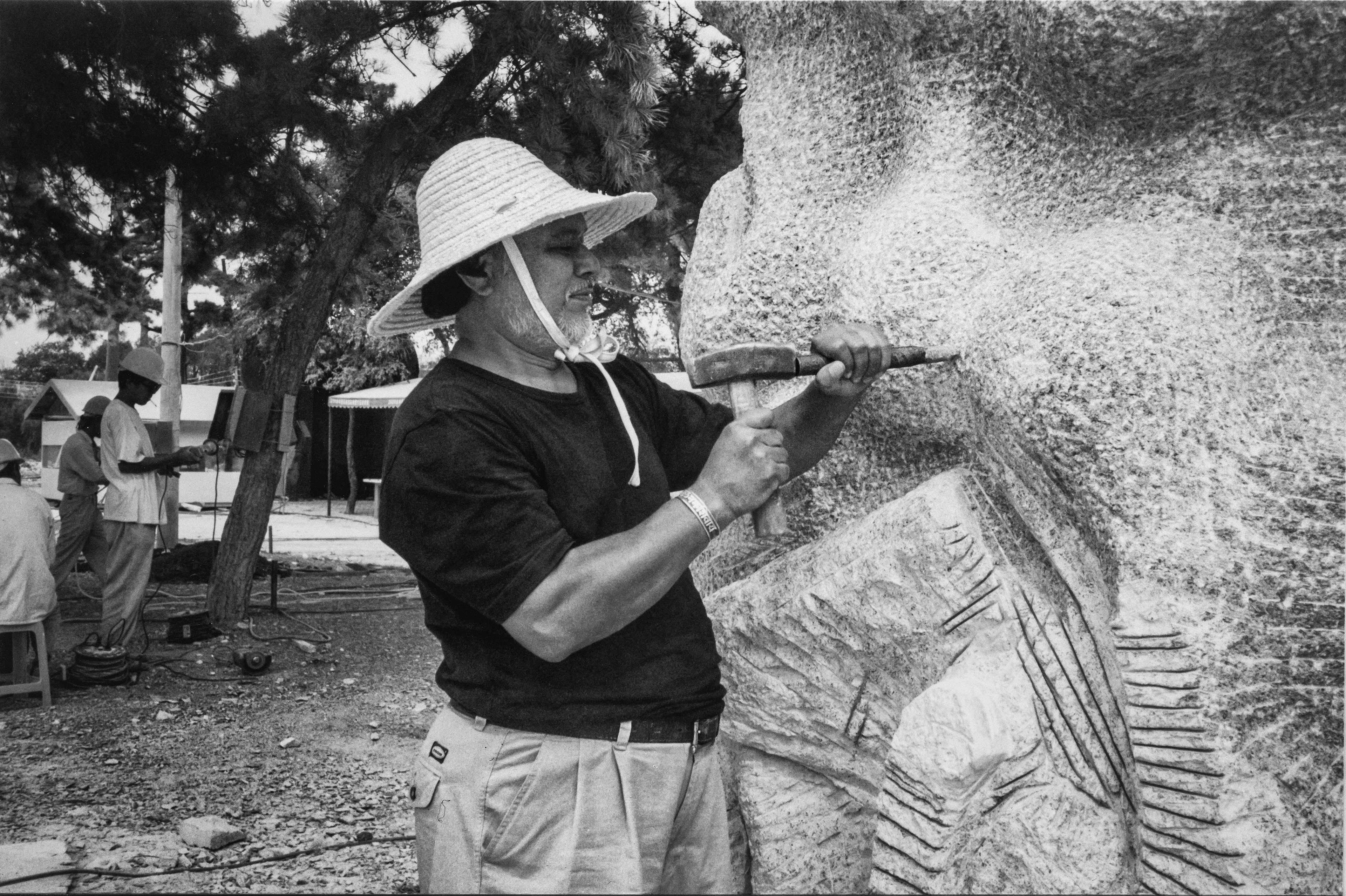
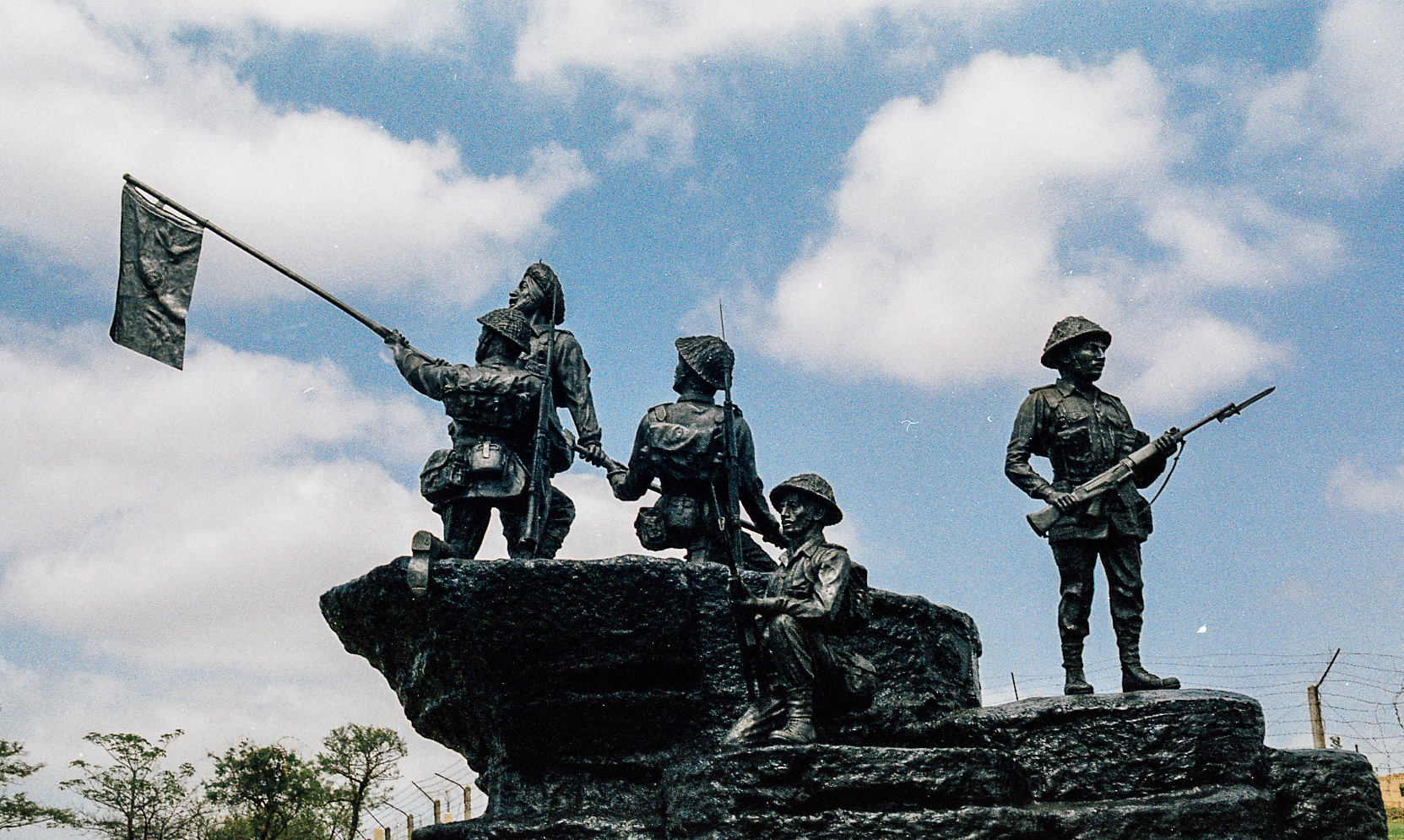
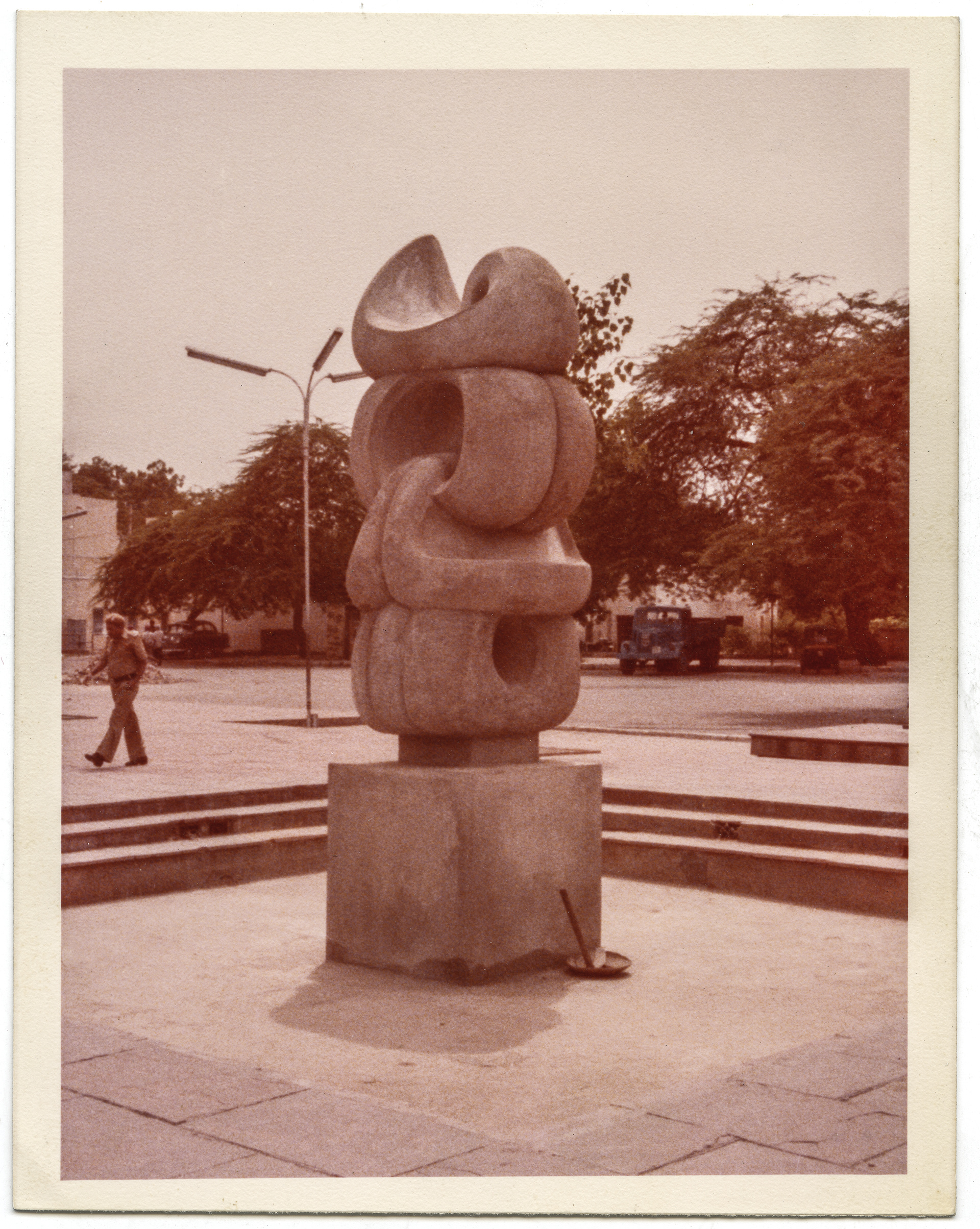
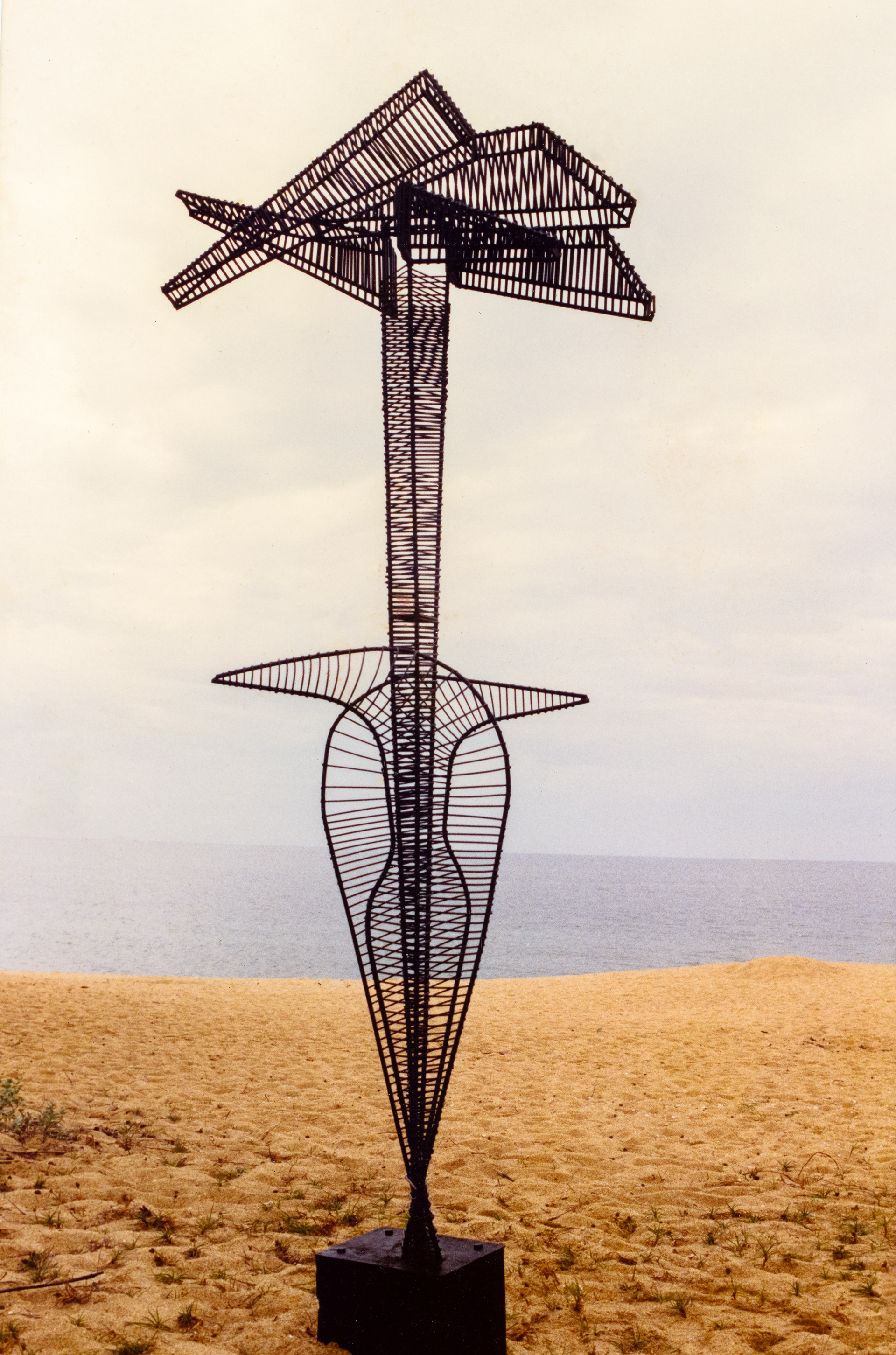
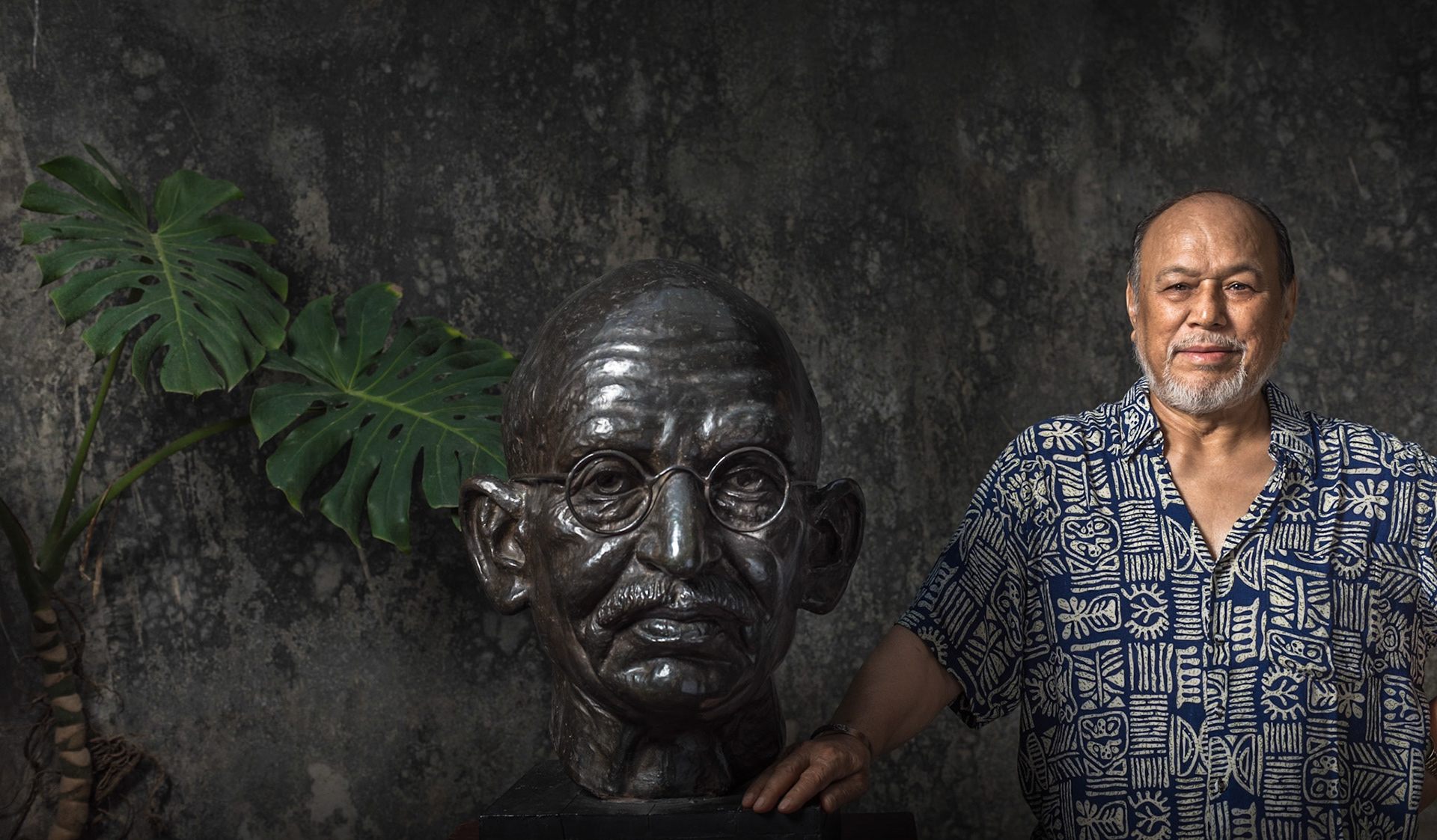
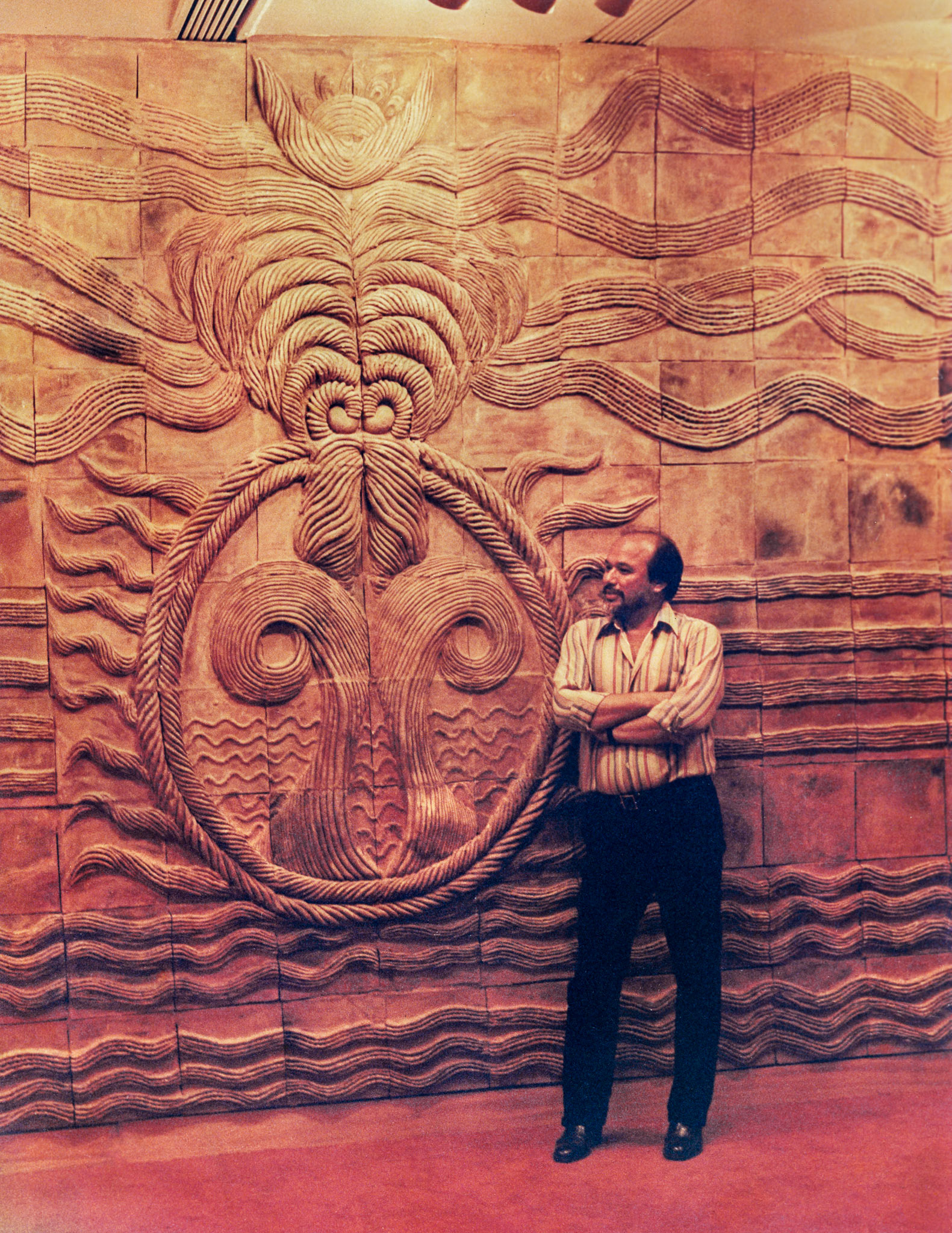
Over a career of more than four decades, Ramesh Bisht created upwards of forty works for public spaces, from monumental symbolic sculptures and fountains to commissioned statues of national figures, military leaders and poets. They stand across India and on four continents. A catalogue of the principal works follows.

"The strong, clearly executed drawings depict the sculptor's definition of form." 
Richard Bartholomew, The Times of India, 1976
"Bisht, himself looking like a man hewn out of a Himalayan rock, gives his mountain memories a drawing-room habitat as perfectly as can be imagined."
Ratna Dhar Jha, Morning Echo, 1976

"He is bold in his treatment, direct in his approach and clear in his conception, yet he is deceptively meaningful. His works communicate a feeling, a feeling intrinsic in the material."
K. N. Kacker, exhibition catalogue, 1968
"Bisht, a hugely built, wrestler-like artist who possesses the looks of Lenin, has amassed a lot of experience during his teaching and travelling career. The pieces on show suggest his mastery of free form."
Dnyaneshwar Nadkarni, Mid-Day, Mumbai, 1988
The 1960s - A debut noticed
"His total achievement is singularly his own. The impact of his personality is an element that one never misses in his work." 
K. N. Kacker, catalogue, Exhibition of Sculptures of Ramesh Bisht,
September 1968
"Ramesh Bisht, an artist from Lucknow, is courageous in his treatment. It is his first ever show in the capital and, one feels, he would draw the attention of art lovers."
Uday Narain Tewari, The Indian Express, January 1969
"Sculpture is not merely photographic representation. It is a true reflection of a person's soul."
(on his bust of Lenin) Vishnu Prabhakar, Nai Duniya, 1969

The 1970s - A language of his own
"There is no mistaking the energy and alertness of the form. I see a sort of genesis in this."
Richard Bartholomew, The Times of India, January 1969
"There is something votive and mysterious in their shapes, something spontaneously symbolic of alert human and animal life."
Richard Bartholomew, The Times of India, December 1976
"The overriding impression that one carries home from his work is of a down-to-earth robustness. It is certainly a highly fortified outlook, uncompromising, oak-like. It makes for enigmas much as the Easter Island sculpture does, or the hieroglyphics of ancient cultures do."
Keshav Malik, catalogue, Exhibition of Sculpture, December 1976
"Fearlessly conceived and fiercely executed, these drawings are indeed the indications of an impending landslide in the artist's sensibilities."
Ratna Dhar Jha, Morning Echo, 1976
The 1980s - Mastery of free form
"The sculptor has here ample scope for what may be called winged forms: immaculately sweeping curves, shapes reaching up to conical points and intelligent interlocking of space and mass."
Dnyaneshwar Nadkarni, The Times of India, Mumbai, 1988
"There is a remarkably well executed bronze piece entitled Sea Shell. It is a solid piece, very attractive. The hand of the master can be clearly seen."
Arkay, The Afternoon Despatch & Courier, Mumbai, 1988
"His latest exhibition of drawings and bronzes marks an upward curve. The forms are abstract, fetching, smoothly sensuous. The artist exploits the latent qualities of the metal adroitly."
Keshav Malik, The Times of India, New Delhi, 1989
"Here the artist moves from the tactile to the pure vision of the light in form."
(on Head of an Owl) Santo Datta, The Indian Express, 1989
"The forms are masses reminiscent of mountain peaks, slopes, hills sliding down with graceful movements."
P. N. Mago, 1989
The 1990s - The animal and the elements
"Bisht's bronzes and fibreglass reliefs attempt to define the cosmos in the terminology of the animal."
Nirupama Dutta, Express Helpline, 1997
"The work titled Flames has the maximum life. It is this one that really sets the imagination afire."
Keshav Malik, The Times of India, 1997
In the Hindi press 
"He considers nature as his guru. When one is learning, a teacher is certainly one's guru, but soon his task is over. There is no end to what one can learn from nature."
Ibbar Rabbi, Navbharat Times, 1992
"Bisht makes a lot of drawings, and not merely as preliminary sketches for his sculptures. They help one understand his creative process."
Prayag Shukla, Dinman, 1977
"Young artist Ramesh Bisht has carefully listened to this challenge of our age. He appears to be quite aware of the language peculiar to sculpture."
Asad Ali, Rachna, 1968
Back to Top