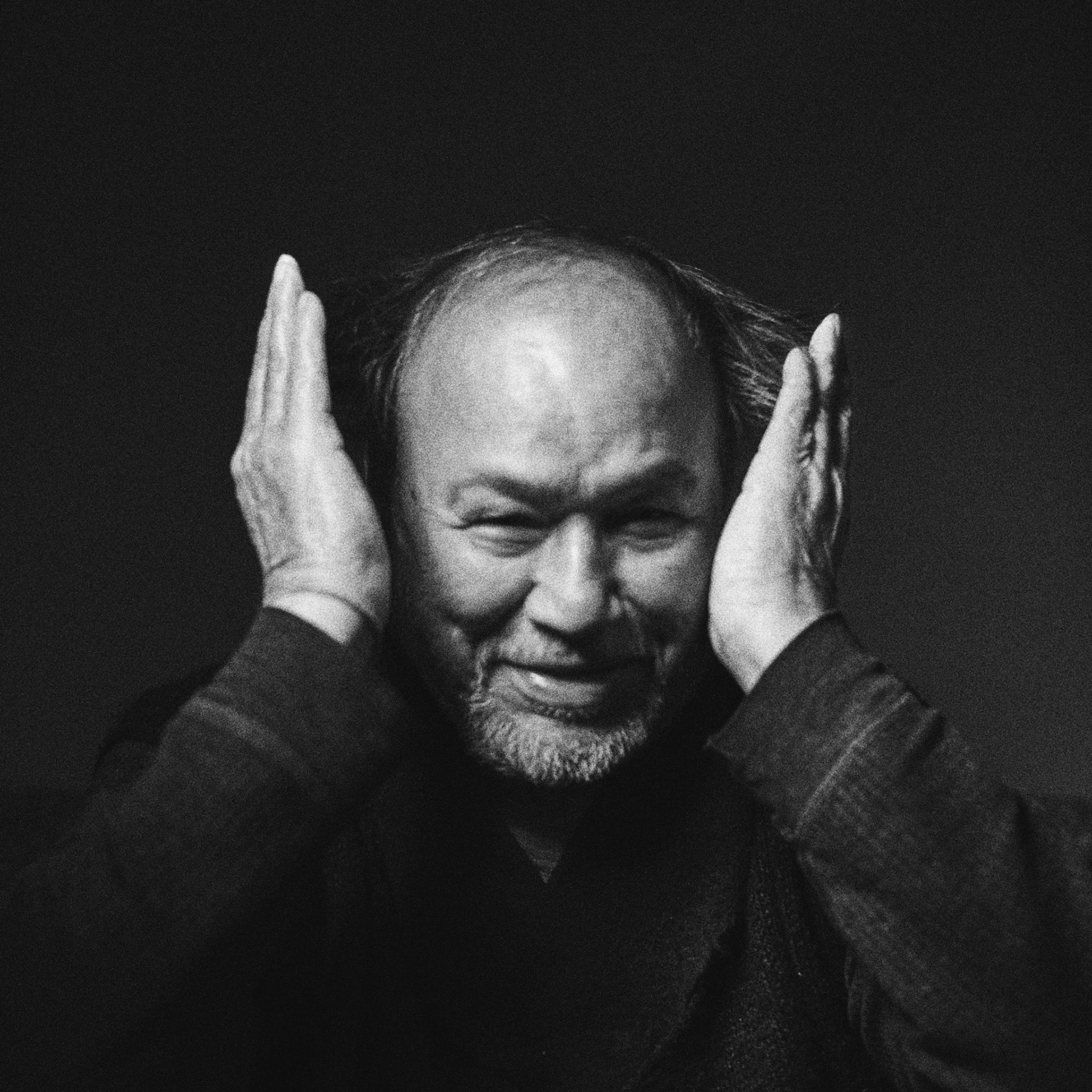
"I shall consider nature my biggest inspiration and my real guru."
Ramesh Bisht was born in 1945 in the village of Pokhri, in the hills above Lansdowne in Garhwal. The first eight years of his life were spent close to the land, among oak and blue pine forests, mountain streams and the massive balanced stones that he would later say gave him his lifelong feeling for monumental form. The Himalayas were his first teacher. The five elements, jal, thal, vayu, agni and aakash, water, earth, fire, air and ether, became the quiet grammar of everything he made.
His path into art was lit by his elder brother, the painter Ranvir Singh Bisht, nineteen years his senior and already an established figure in the Lucknow art world. It was Ranvir who first told him the truth of the calling: "You do not know what a real artist is. The road to art is both challenging and difficult." At the Government College of Arts and Crafts in Lucknow, where Ramesh took his diploma in sculpture, he found his guru in Narayan H. Kulkarni, a master of bronze casting who taught that there could be no sculpture without drawing.
In the late 1960s he moved to Delhi and made his name. He worked in the Creative Arts Section of Bal Bhawan, taught at the Sarda Ukil School of Arts, and in 1979 joined the Sculpture Department of the College of Art, New Delhi, retiring as its Head in 2005. In 1979 his bronze Pollen won the National Award. English and Hindi critics alike followed his work for decades. Richard Bartholomew wrote of his "strong, clearly executed drawings" that "depict the sculptor's definition of form," and Dnyaneshwar Nadkarni praised his "mastery of free form."
Across stone, wood, terracotta, welded metal and his beloved bronze, his subjects returned again and again to nature and the animal: the bull and the cosmic Nandi, the sea shell, the seed and pollen, the birth of a flower, the slow upward push of organic growth. His monumental commissions stand in public places far beyond Delhi, from the bronze Victory at Mhow Fort to the twenty foot granite Mystery created at the Changchun International Symposium in China, and busts of Mahatma Gandhi installed in Jamaica, the Netherlands, Argentina and Mahe.
For all his travels and honours, his real world remained the hills. "For me art is beauty," he said. "Even modern art can be beautiful." He dreamed, to the end, of a house with a sculpture garden where his art would be part of the structure itself. As he liked to put it, an artist never retires.
"At the age of almost 70, I still feel a childlike elation and enthusiasm in drawing and sculpting."